Specialization in Atheism
Science and Islamic Thought
Level 2 – Online Diploma
A Profound Exploration into the Intersection of Belief, Reason, and Science.
PRE-REQUISITE: To enroll in the Level 2, students must complete the prerequisite course:
Specialization in Atheism, Science and Islamic Thought Level 1
About The Course
Specialization in Atheism, Science and Islamic Thought – Level 2 marks an important academic milestone in Al Balagh Academy’s three-year diploma. Learners who have completed Level 1 now progress into the next structured stage of their intellectual journey, studying the next set of six core modules delivered within the live teaching cycle.
This programme is intentionally designed to strengthen the student’s reasoning skills, broaden their theological literacy, and deepen their understanding of how Islam engages with major philosophical and scientific debates shaping the modern world. Each module contributes to a coherent, disciplined, and holistic study of Islamic thought as it relates to atheism, materialism, scientism, and contemporary scepticism.
Students benefit from live interactive teaching, classical text study, guided readings, open discussions, and continuous academic support—ensuring consistent growth throughout their learning journey. Level 2 maintains the same academic seriousness and intellectual depth that characterises the entire diploma, guiding learners steadily toward the completion of the full 18-module specialisation.
PRE-REQUISITE: To enroll in the Level 2, students must complete the prerequisite course: Specialization in Atheism, Science and Islamic Thought Level 1

6 Modules

72+ Live Online Sessions
72+ teaching hours

Duration : 1 Year

Video Recordings Available

Access to Mobile App

Digital Certificate

Saturdays, 2 PM - 4 PM (London, UK)

From £28.99/Month
(For 12 Months)
Enroll Now
Starts on 7th February 2026
Course Fee
Pay in Full: £479.99 £299.99 (Save 37.5%)
Pay In 12 Installments: £28.99 per month
(Note: Less discount available with installment plan)
Registration Deadline:
6th February 2026
Al Balagh Scholarship
AlBalagh Scholarship is available for learners who cannot afford the fee.
Share This Course:


Course Team
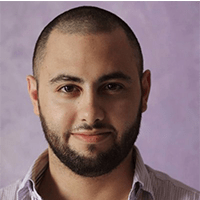
Ustadh Asadullah Ali Al-Andalusi
(Research Fellow, Yaqeen Institute | Founder, The Andalusian Project)

Dr. Jamie B. Turner
(Doctoral Researcher,Philosophy of Religion, University of Birmingham)

Ustadh Safaruk Chowdhury
(Humanities Team and IB theory of knowledge coordinator, tutor in history and religious studies)
Modules


Specialization in Atheism Science and Islamic Thought Level 1
Part-Time | 3 Years | 18 Modules
Modules Group A
Core Theological & Philosophical
Frameworks
Click to View >>
Modules Group B
Philosophy, Metaphysics &
Epistemology
Click to View >>
Modules Group C
Atheism, Modern Thought &
Intellectual Critique
Click to View >>
Level 3 – Foundation
SEMESTER 1
Click to Expand Syllabus >>
MODULE GROUP A — Core Theological & Philosophical Frameworks
- Introduction to Islamic Theology
- The Creed of Ṭaḥāwī (al-ʿAqīda al-Ṭaḥāwiyya)
- Sanūsī’s Preliminaries to Islamic Theology (Muqaddimāt)
- Sanūsī’s Mother of Proofs (Umm al-Barāhīn) – Part 1
- Sanūsī’s Mother of Proofs (Umm al-Barāhīn) – Part 2
- Ghazālī’s Book of Knowledge (Iḥyāʾ Book 1)
(Note: Students complete all modules across the three-year programme. Modules run in a rolling cycle, so learners join modules which are currently being taught.)
Level 3 – Foundation
SEMESTER 2
Click to Expand Syllabus >>
MODULE GROUP B — Philosophy, Metaphysics & Epistemology
- Philosophy of Religion
- Philosophy of Science
- Decoding Philosophy, Science & Scientism
- Decoding Islamic Metaphysics
- Decoding Islamic Epistemology
- Islam and Science
(Note: Students complete all modules across the three-year programme. Modules run in a rolling cycle, so learners join modules which are currently being taught.)
Level 4 – Intermediate
SEMESTER 3
Click to Expand Syllabus >>
MODULE GROUP C — Atheism, Modern Thought & Intellectual Critique
- Reviewing Armin Navabi’s Why There Is No God
- Reviewing Richard Dawkins’ The God Delusion
- Where the Conflict Really Lies (Alvin Plantinga)
- Islamic Theology & the Problem of Evil
- Advanced Studies in Islam and Atheism
- Daʿwah Skills (Applied Engagement & Communication)
(Note: Students complete all modules across the three-year programme. Modules run in a rolling cycle, so learners join modules which are currently being taught.)
Level 4 – Intermediate
SEMESTER 4
Click to Expand Syllabus >>
SEMESTER-WISE MODULE STRUCTURE
SEMESTER 4
Each module carries 12 credits, equivalent to approximately 120 hours of learning (contact hours, reading, assessment, independent study, etc.).
| Module Code | Module Title | Duration | Credits |
|---|---|---|---|
| WP202 | Abnormal Psychology (with Introduction to Neuropsychology) | 12–16 weeks | 12 |
| IP202 | Mental Health from an Islāmic Perspective | 12–16 weeks | 12 |
| IS202 | The Fiqh of Counselling and Psychotherapy | 12–16 weeks | 12 |
| CS202 | Crisis Intervention and Initial Assessment | 12–16 weeks | 12 |
Semester Overview
Semester 4 focuses on understanding mental health disorders from both Western diagnostic frameworks and Islāmic conceptualizations of emotional and spiritual imbalance. Students study abnormal psychology, including foundational neuropsychology, to understand disorders of the brain and behaviour. Through the Islāmic mental health module, students critically examine how classical scholars approached emotional and psychological distress. The fiqh-based module introduces essential jurisprudential principles relevant to ethical counselling and therapeutic boundaries. Finally, students are equipped with foundational crisis intervention strategies, including techniques for initial client assessment and risk management, with application to Muslim settings.
(Note: The syllabus is currently under development and may be updated based on academic needs and emerging research.)
Level 5 – Advanced
SEMESTER 5
Click to Expand Syllabus >>
SEMESTER-WISE MODULE STRUCTURE
SEMESTER 5
Each module carries 12 credits, equivalent to approximately 120 hours of learning (contact hours, reading, assessment, independent study, etc.).
| Module Code | Module Title | Duration | Credits |
|---|---|---|---|
| WP301 | Cognitive Behavioural Therapies( Approaches to Therapeutic Intervention) | 12–16 weeks | 12 |
| IP301 | Youth, Digital Behaviour and Online Islāmic Counselling | 12–16 weeks | 12 |
| IS301 | Abu Zayd al-Balkhi’s Sustenance of the Soul | 12–16 weeks | 12 |
| CS301 | Advanced Therapeutic Skills and Strategies: Clinical Applications | 12–16 weeks | 12 |
Semester Overview
Semester 5 bridges advanced therapeutic practice with Islāmic heritage and contemporary youth challenges. Students explore the different approaches to therapeutic interventions (Cognitive Behavioural Therapies (CBT), Solution -Focused Brief Therapy, Narrative Therapy and Humanistic therapy) their principles, and applications in both secular and faith-sensitive settings. The module on Youth and Digital Behaviour addresses emerging psychological challenges from online environments, including internet addiction and cyberbullying, with an emphasis on providing effective online counselling through Islāmic frameworks. Students also study Abu Zayd al-Balkhi’s pioneering work on mental and emotional health, offering a rich classical foundation for holistic counselling approaches. Finally, the Advanced Therapeutic Skills module sharpens practical counselling tools for dealing with complex client scenarios, preparing students for deeper client engagement.
(Note: The syllabus is currently under development and may be updated based on academic needs and emerging research.)
Level 5 – Advanced
SEMESTER 5
Click to Expand Syllabus >>
SEMESTER-WISE MODULE STRUCTURE
SEMESTER 6
Each module carries 12 credits, equivalent to approximately 120 hours of learning (contact hours, reading, assessment, independent study, etc.).
| Module Code | Module Title | Duration | Credits |
|---|---|---|---|
| WP302 | Research Methods in Psychology | 12–16 weeks | 12 |
| IP302 | Islāmic Life Coaching and Tazkiyah al-nafs | 12–16 weeks | 12 |
| IS302 | Imam Razi’s Traditional Psychology( Islāmic Healing) | 12–16 weeks | 12 |
| CS302 | Evidence-Based Practices and Programme Evaluation | 12–16 weeks | 12 |
Semester Overview
Semester 6 focuses on developing advanced scholarly and practical competencies. In Research Methods in Psychology, students gain essential skills for academic inquiry, enabling them to critically evaluate literature, design studies, and apply statistical reasoning. The Islāmic Life Coaching and Tazkiyah al-nafs module equips students with spiritually grounded coaching methodologies rooted in self-purification and character refinement. The module on “Islāmic Healing” will provide an in-depth conceptual understanding of the definition, theory, and practice. It will challenge the way modern or conventional approaches are practiced today which can be materialistic, reductionist, contrary to Islāmic theological principles and devoid of an Islāmic model of spirituality. This Islāmic healing module provides an approach to treatment and care which not only reforms the practitioner but also the patient using different modalities of prevention and treatment. Finally, Evidence-Based Practices and Programme Evaluation trains students to assess the effectiveness of psychological interventions and community programmes, with an emphasis on ethical practice and cultural sensitivity.
(Note: The syllabus is currently under development and may be updated based on academic needs and emerging research.)
SEMESTER 5
(DECEMBER – MAY)
Total Credits: 48 credits
Click to Expand Syllabus >>
SEMESTER-WISE MODULE STRUCTURE
SEMESTER 7
Each module carries 12 credits, equivalent to approximately 120 hours of learning (contact hours, reading, assessment, independent study, etc.).
| Module Code | Module Title | Duration | Credits |
|---|---|---|---|
| WP401 | Counselling Diverse Population | 12–16 weeks | 9 |
| IP402 | Neuropsychology and Professional Ethics in Islāmic Counselling | 12–16 weeks | 9 |
| IS401 | Mukhtasar Ihya Ulum ad-Din (Psychospiritual Themes) | 12–16 weeks | 9 |
| CS401 | Supervised Practicum I | 12–16 weeks | 21 |
Semester Overview
Semester 7 marks the transition from theory-heavy study to real-world practice. The module Counselling Diverse Populations prepares students to work with clients from varied ethnic, cultural, and religious backgrounds, focusing on inclusion, intersectionality, and cultural sensitivity. Neuropsychology and Professional Ethics equips students with foundational neurological concepts relevant to behaviour and cognition, while emphasising ethical practice within both Islāmic and secular frameworks. Mukhtasar Ihya Ulum ad-Din explores selected psychospiritual themes from Imam al-Ghazali's seminal work, nurturing spiritual insight and reflective practice. The core of the semester is Supervised Practicum I, a 21-credit, practice-based module where students begin applying theoretical knowledge in a real counselling setting under qualified supervision. This practicum focuses on client engagement, therapeutic communication, reflective journaling, and initial casework.
(Note: The syllabus is currently under development and may be updated based on academic needs and emerging research.)
SEMESTER 5
(DECEMBER – MAY)
Total Credits: 48 credits
Click to Expand Syllabus >>
SEMESTER-WISE MODULE STRUCTURE
SEMESTER 8
Each module carries 12 credits, equivalent to approximately 120 hours of learning (contact hours, reading, assessment, independent study, etc.).
| Module Code | Module Title | Duration | Credits |
|---|---|---|---|
| WP402 | Psychotherapy with Diverse Populations | 12–16 weeks | 9 |
| IP402 | Advanced Islāmic Psychological Theories | 12–16 weeks | 9 |
| IS402 | Establishing Counselling and Life Coaching Services: Ethics, Regulations, and Sustainability | 12–16 weeks | 9 |
| CS402 | Supervised Practicum II & Professional Development | 12–16 weeks | 9 |
Semester Overview
Semester 8 is the capstone of the programme, integrating all previous learning into practice and professional readiness.
- Psychotherapy with Diverse Populations deepens students’ ability to tailor therapy across varied cultural and faith-based contexts, with a focus on inclusivity and adaptability.
- Advanced Islāmic Psychological Theories pushes beyond foundational models, encouraging critical engagement with emerging scholarship in Islāmic psychology.
- IS402 equips students with the practical, ethical, and managerial skills required to establish and sustain professional services in counselling and life coaching—aligned with both Islāmic ethics and contemporary regulatory frameworks.
- Supervised Practicum II builds on the first practicum, demanding greater autonomy, depth of clinical insight, professional reflection, and development of a personal counselling style within a faith-based ethical framework.
(Note: The syllabus is currently under development and may be updated based on academic needs and emerging research.)
ENTRY REQUIREMENT
Eligibility criteria:
- 16+ years of age.
- Fluent in the English language.
- Should have completed: Specialization in Atheism, Science and Islamic Thought- Level 1
Our programme follows a structured three-level diploma format designed to offer both academic coherence and flexibility:
- Each level consists of six modules, forming part of the wider eighteen-module curriculum.
- The diploma operates on a rolling module system, where teaching continues seamlessly throughout the year.
- Each level is organised into scheduled academic periods that include:
- live online classes
- guided readings
- assessments
- interactive discussions with instructors
This flexible structure ensures that every student completes all eighteen modules over the duration of the programme, while benefiting from a well-supported and accessible learning experience—regardless of when they begin their studies.
The programme will be delivered in a series of live online classes, tutorials, presentation-based lectures, textbook-based traditional lectures, seminars, and workshops, all delivered live online. The recordings will be uploaded onto our advanced ILM student’s learning portal (24/7 Accessibility from a web browser and Mobile App) for students to review and revise at their own pace and convenience.
The whole course is taken online and offers a flexible way to study while maintaining work and personal commitments. It consists of the following key approaches:
Classical Texts: Students will study the classical texts from beginner level to advanced levels to gain familiarity with classical books on multiple disciplines written by renowned Shariah scholars. Students will explore many classical textbooks during the programme.
Presentation-Based Lectures: There will be many courses every semester that will be delivered through presentations to support easier learning and to assure that students who learn visually can benefit.
Live Online Sessions: There will be regular weekly live interactive online classes to discuss topics raised with case studies where appropriate. You are encouraged to discuss cases during the live interactive sessions, ask questions and raise important points for feedback. This interactive session will be a key component of the learning process and the more you can engage with your lecturer, the more productive and enjoyable your learning will be.
Video Recordings: The live session will be recorded, and you can access these recordings on the website. This will make it easy for students to revise and make notes later.
Online Course Material: In every course, your lecturer will suggest further reading material that you can review, print, read, and engage with, prior to the live session. This course material may be in the form of articles, case scenarios with questions, or recorded videos.
Online Learning Activities and Online Assessments: In every course, there will be a variety of online learning activities, practical assignments, Module Assessments (graded or ungraded) to help you revise, reflect and gain a pragmatic approach and understanding to the subject.
Discussion with Fellow Learners: Discussion with fellow learners is another important component of your development. In our course-specific WhatsApp groups, and our regular online Muzakarah sessions, students can review their course material and class with other learners, and share ideas with fellow students.
Students Seminars: Regular participation in seminars will develop thinking, presentation and public speaking skills. (Students will learn to produce presentations and present via seminars, whilst presenting their arguments. This will be an excellent opportunity to receive constructive feedback.
3 Levels: The Online Diploma programme has been divided into 3 levels.You must attain the required credit points in each Semester to complete Year I,II, III. Upon successful completion of every level, students will be awarded a certificate to acknowledge their academic achievement.
Flexible Medium Of Learning: Online education has enabled pursuing almost every course and programme easily. Students can attend the live classes from the comfort of their home and complete their sacred journey of Islamic learning without compromising on other commitments.
Attendance Requirement: Attendance (a minimum of 50% attendance) is mandatory in the live online sessions of all core courses.
24/7 Access to Video Recordings: Video recordings for every live session will be available within 48 hours on students’ course dashboard for revision and convenience.
Mobile App: Students can get access to the course content on the go, using Al Balagh Academy mobile app(on both Apple and android devices) and complete the coursework from anywhere and at any time.
Upon successful completion of the second level, students will be awarded:
إجازة متخصصة في الدعوة والرد على الإلحاد (Specialized Ijazah in Da'wah and Countering Atheism (Level 2))
Course Overview
Level 2 of the Specialization in Atheism, Science and Islamic Thought deepens the learner’s engagement with the core questions at the heart of the Islamic intellectual tradition—questions surrounding the reality of God, the nature of existence, the foundations of knowledge, the limits of scientific inquiry, and the spiritual and ethical responsibilities of the seeker.
This level guides students through a structured exploration of how revelation, reason, and experience shape the formation of belief; how classical scholars constructed rational proofs for essential doctrines; and how metaphysical principles inform our understanding of causality, necessity, and the nature of reality. Students examine how scientific claims should be evaluated within their proper philosophical boundaries and how certainty, doubt, and justification are understood across Islamic epistemic frameworks.
Alongside these analytical themes, the programme emphasises intellectual character—drawing from classical texts to cultivate sincerity, discipline, and clarity of intention in the pursuit of knowledge. Through this integrated study of theology, philosophy, science, metaphysics, and epistemology, learners build a coherent framework for critically engaging contemporary atheistic and sceptical worldviews. By the end of Level 2, students are firmly grounded in the major concepts and perspectives of Islamic thought and prepared to progress confidently into the final stage of the diploma.


Learning Objectives
This level aims to:
- Understand major arguments for God’s existence, revelation, and prophecy, and evaluate atheistic objections using structured philosophical reasoning.
- Examine the assumptions behind scientific inquiry and distinguish sound scientific methodology from ideological scientism.
- Learn the logical structure of Sunni kalām and understand how classical scholars established core theological principles.
- Study Ghazālī’s ethics and hierarchy of knowledge, applying them to intellectual and spiritual self-development.
- Understand the metaphysical categories of existence and how they determine Islamic views on causality, necessity, and divine reality.
- Analyse Islamic theories of certainty, justification, and truth, and evaluate modern secular epistemological assumptions.
- Build a cohesive understanding of how Islamic theology, philosophy, and scientific thought collectively respond to atheistic and sceptical worldviews.
Learning Outcomes
Upon completion of this level, students will:
- Be able to critically assess and articulate responses to the strongest atheistic and theistic arguments.
- Confidently evaluate scientific claims, theories, and worldviews from within an Islamic intellectual framework.
- Explain theological doctrines using kalām principles with clarity and precision.
- Apply Ghazālī’s ethical and intellectual frameworks to their approach to learning and personal growth.
- Articulate key metaphysical concepts such as necessity, contingency, and causality, and explain their relevance to Islamic theology.
- Differentiate between knowledge, conjecture, and doubt, and respond to modern epistemic challenges using Islamic reasoning.
- Formulate well-structured Islamic responses to atheism, scientism, and secular philosophies using arguments grounded in the modules studied.

Explore Relevant Courses
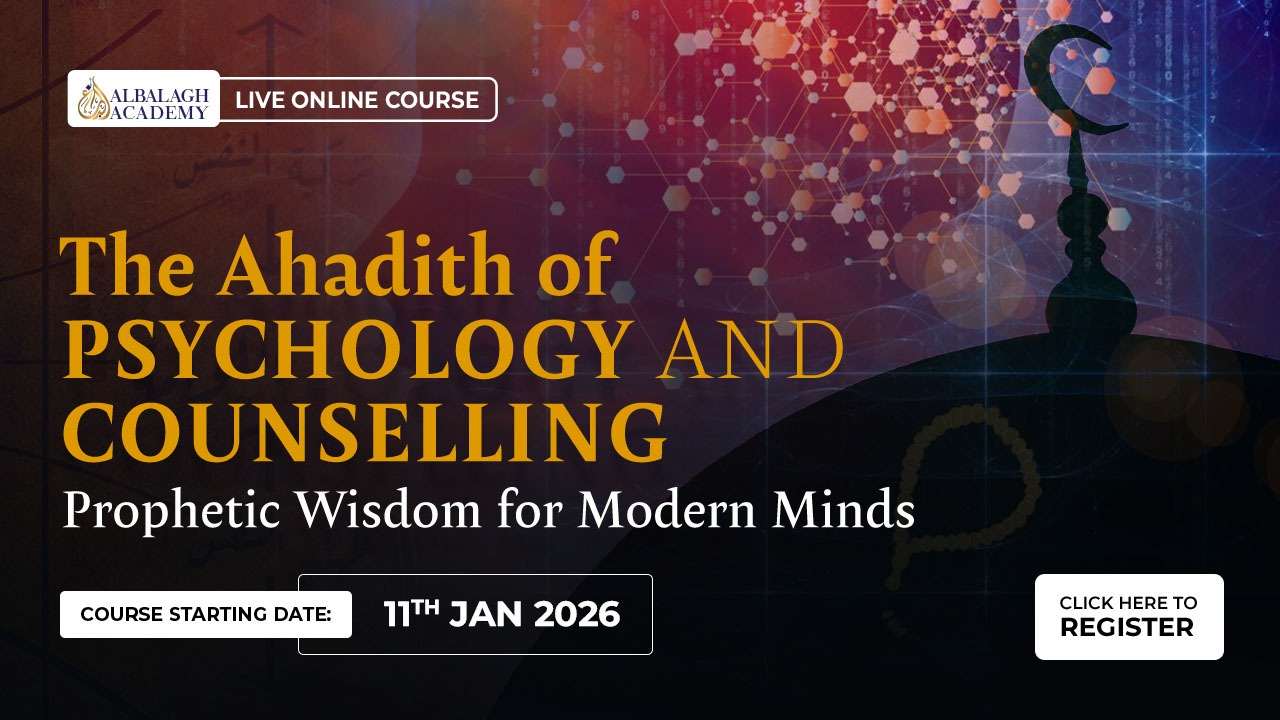
The Ahadith Of Psychology and Counselling: Prophetic Wisdom for Modern Minds
The Prophet Isa (Jesus) and Maryam (Mary): Islam, Christianity, History, and Science
Philosophy of Science
Testimonials
Frequently Asked Questions
Are Al Balagh diplomas recognised or accredited?
Al Balagh diplomas do not provide an externally accredited or recognised qualification. Our own expert team works at the course content. With over 40000+ learners, we are continuously growing and our vision is to make Al Balagh qualifications renowned worldwide through our expert team, without seeking formal accreditation or recognition from external institutional bodies.
How is this online course structured?
Our online diploma consists of live interactive online sessions, pre-recorded videos, online course material that include, presentations, reading material & online learning activities. Students may ask questions and get their doubts cleared from their respective lecturers, if any. Our dedicated academic support team will assist you as required.
Are the course structure, content, and schedule guaranteed to remain the same?
Every effort has been made to ensure the accuracy of our published course information. However, our programmes are subject to ongoing review and development. Changing circumstances may cause alteration to, or the cancellation of, courses. Changes may be necessary to comply with the requirements of relevant bodies or revisions to subject benchmark statements. We may also make changes to keep courses updated and contemporary, or as a result of student feedback. We reserve the right to make variations if we consider such action to be necessary or in the best interests of students.
When will I have access to the online course material?
Upon successful enrollment, you will get access to ILM Portal (our advanced online learning portal) within 24 hours. (login details and important contact information will be provided on your registered email address)
Will I get notification for live sessions?
You will be able to view all course wise live session details including joining links on your ILM Portal calendar. Weekly email reminders are also sent out on your registered email address. If you find any difficulty with the link/calendar please contact us immediately via Email: admin@albalaghacademy.org or by Phone: +447946835578 . Our dedicated support team will ensure that your problem gets resolved at the earliest
Is it mandatory to attend live sessions?
Attending live sessions, while not mandatory for course progression, is strongly encouraged. Prominent scholars and educators highlight the unique value of live attendance, emphasizing its role in the authentic transfer of knowledge. Live participation fosters an interactive learning environment, allowing for real-time questions, discussions, and clarifications that are not as easily replicated through recorded materials. This live engagement is seen as essential for a deeper understanding and connection to the subject matter, echoing the tradition and Adab of scholarly learning.
I missed a live session. Can I get the video recordings?
If you miss a live session, don't worry! You can access the recorded sessions, presentations, and relevant materials on your course dashboard within 24-48 hours after the live class is delivered. Our admin team uploads the content promptly so you can catch up on what you missed and be well-prepared for the next live class. Simply log in to the ILM Student portal and find the materials under the respective course section if you miss a scheduled live lecture.
Can I download the video recordings on my device (Desktop/Laptop/Mobile/Tab)?
We understand that having constant access to educational content is important for our students. However, to maintain the integrity and security of our course materials, videos are not available for download directly from the Learning Management System (LMS). We ensure that our LMS is accessible at all times and from various devices, allowing you to study at your convenience, wherever you have internet access. If you have any concerns about accessing the materials or need assistance with the LMS, please do not hesitate to contact our support team for help.
I have doubts but I cannot attend the live session. Any other way to ask my questions?
For any doubts or discussions, join the dedicated Course WhatsApp Groups where you can engage with peers for question clarification and discussions. Course instructors may be part of these groups at their discretion. If you need to contact a specific instructor, please reach out to the Admin Team.
How do I interact with my classmates?
You can interact with your classmates on our WhatsApp Groups exclusive for the course students. To join the official WhatsApp group, log in to your course on https://ilm.albalaghacademy.org/ and access the "Join Official WhatsApp Group'' tab. Go to Start → Sessions → Welcome Aboard: Course Introduction → Join Official WhatsApp Group
Joining the group will allow you to connect with fellow course students for discussions and updates.
What is the process for reaching out to the instructor?
For inquiries about instructor contact information, please reach out to the course administrator directly. Instructor details will be shared only with their explicit consent. However, participants are encouraged to connect through group discussions.
( Please note, they often have demanding schedules and may not always be able to address individual queries. We encourage you to attend live sessions and utilize the Q&A period for questions. For queries post-lecture, feel free to contact our administrators, and we will do our best to assist. Responses from instructors will depend on their availability. Thank you for your understanding.)
How long will I have access to the online diploma?
The duration of access to the paid online diploma is 1 year from your date of enrollment.
I am facing trouble signing into the “ILM” Online Student portal. What should I do?
In case you find any trouble accessing your account, then please contact us immediately via email: admin@albalaghacademy.org or by phone: +447946835578 . Our dedicated support team will ensure that your problem gets resolved at the earliest. The time taken to resolve issues depends on the team's availability and working hours. We guarantee prompt resolution of your queries. Please be aware that it typically takes around 24 hours to resolve any technical issues.
How can I apply for the Al Balagh Scholarship?
Al Balagh Academy values seekers of knowledge more than anything. Please visit here to apply for a scholarship. Our team will assess your application and respond in 2 - 3 working days.
What is the diploma grading policy?
Our course grading policy is designed to ensure a comprehensive understanding and mastery of the subject matter. To successfully pass, students are required to achieve a minimum grade of 40% in Level 1 to qualify for Level 2.
The assessments are usually online objective assessments with multiple-choice questions, although the format can vary depending on the instructor's preference for evaluating students in their assigned modules.
Achieving a score of 40% or above overall is essential to progress to the next level of the diploma.
When can I expect to receive my Diploma Certificate?
Following successful course completion, you will be eligible to receive your digital certificate of achievement. To be eligible, you must meet the following criteria:
Attainment of the Minimum Passing Threshold: A minimum grade of 40% overall is required to qualify for the certificate of achievement for each level of the diploma.
Who do I contact if I still have doubts related to my courses?
If you have questions or need assistance during your journey, our dedicated support team is here for you. Your success is our priority. Please be patient as our team works round the clock to provide support.
📞 Admissions Team (Payment, Scholarships, Enrollment, or information about New Courses):
- Email: info@albalaghacademy.org
- WhatsApp: [Admissions WhatsApp Support]
🚀 Short-Term Course Support (Assessment, Course-related, or IT-Technical issues):
- Email: admin@albalaghacademy.org
- WhatsApp: [Course WhatsApp Support]
Is there a mobile app for accessing my courses ?
Maximize your learning flexibility with our newly updated mobile app! Enjoy seamless access to your courses anytime, anywhere. Click on the links below to download the app tailored to your device:
- For Android users: Download from the Google Play Store
- For iOS users: Download from the App Store
Dive into a world of convenient and accessible learning today!
Are Al Balagh courses recognised or accredited?
Al Balagh courses do not provide an externally accredited or recognised qualification. Our own expert team works at the course content. With over 40000+ learners, we are continuously growing and our vision is to make Al Balagh qualifications renowned worldwide through our expert team, without seeking formal accreditation or recognition from external institutional bodies.
How is this online course structured?
Our online course comprises live interactive online sessions, pre-recorded videos, online course material that include, presentations, reading material & online learning activities. Students may ask questions and get their doubts cleared from their respective lecturers, if any. Our dedicated academic support team will assist you as required.
Are the course structure, content, and schedule guaranteed to remain the same?
Every effort has been made to ensure the accuracy of our published course information. However, our programmes are subject to ongoing review and development. Changing circumstances may cause alteration to, or the cancellation of, courses. Changes may be necessary to comply with the requirements of relevant bodies or revisions to subject benchmark statements. We may also make changes to keep courses updated and contemporary, or as a result of student feedback. We reserve the right to make variations if we consider such action to be necessary or in the best interests of students.
When will I have access to the online course material?
Upon successful enrollment, you will get access to ILM Portal (our advanced online learning portal) within 24 hours. (login details and important contact information will be provided on your registered email address)
Will I get notification for live sessions?
You will be able to view all course wise live session details including joining links on your ILM Portal calendar. Weekly email reminders are also sent out on your registered email address. If you find any difficulty with the link/calendar please contact us immediately via Email: admin@albalaghacademy.org or by Phone: +447946835578 . Our dedicated support team will ensure that your problem gets resolved at the earliest
Is it mandatory to attend live sessions?
Attending live sessions, while not mandatory for course progression, is strongly encouraged. Prominent scholars and educators highlight the unique value of live attendance, emphasizing its role in the authentic transfer of knowledge. Live participation fosters an interactive learning environment, allowing for real-time questions, discussions, and clarifications that are not as easily replicated through recorded materials. This live engagement is seen as essential for a deeper understanding and connection to the subject matter, echoing the tradition and Adab of scholarly learning.
I missed a live session. Can I get the video recordings?
If you miss a live session, don't worry! You can access the recorded sessions, presentations, and relevant materials on your course dashboard within 24-48 hours after the live class is delivered. Our admin team uploads the content promptly so you can catch up on what you missed and be well-prepared for the next live class. Simply log in to the ILM Student portal and find the materials under the respective course section if you miss a scheduled live lecture.
Can I download the video recordings on my device (Desktop/Laptop/Mobile/Tab)?
We understand that having constant access to educational content is important for our students. However, to maintain the integrity and security of our course materials, videos are not available for download directly from the Learning Management System (LMS). We ensure that our LMS is accessible at all times and from various devices, allowing you to study at your convenience, wherever you have internet access. If you have any concerns about accessing the materials or need assistance with the LMS, please do not hesitate to contact our support team for help.
I have doubts but I cannot attend the live session. Any other way to ask my questions?
For any doubts or discussions, join the dedicated Course WhatsApp Groups where you can engage with peers for question clarification and discussions. Course instructors may be part of these groups at their discretion. If you need to contact a specific instructor, please reach out to the Admin Team.
How do I interact with my classmates?
You can interact with your classmates on our WhatsApp Groups exclusive for the course students. To join the official WhatsApp group, log in to your course on https://ilm.albalaghacademy.org/ and access the "Join Official WhatsApp Group'' tab. Go to Start → Sessions → Welcome Aboard: Course Introduction → Join Official WhatsApp Group
Joining the group will allow you to connect with fellow course students for discussions and updates.
What is the process for reaching out to the instructor?
For inquiries about instructor contact information, please reach out to the course administrator directly. Instructor details will be shared only with their explicit consent. However, participants are encouraged to connect through group discussions.
( Please note, they often have demanding schedules and may not always be able to address individual queries. We encourage you to attend live sessions and utilize the Q&A period for questions. For queries post-lecture, feel free to contact our administrators, and we will do our best to assist. Responses from instructors will depend on their availability. Thank you for your understanding.)
How long will I have access to the online diploma?
The duration of access to the paid online diploma is 1 year from your date of enrollment.
I am facing trouble signing into the “ILM” Online Student portal. What should I do?
In case you find any trouble accessing your account, then please contact us immediately via email: admin@albalaghacademy.org or by phone: +447946835578 . Our dedicated support team will ensure that your problem gets resolved at the earliest. The time taken to resolve issues depends on the team's availability and working hours. We guarantee prompt resolution of your queries. Please be aware that it typically takes around 24 hours to resolve any technical issues.
How can I apply for the Al Balagh Scholarship?
Al Balagh Academy values seekers of knowledge more than anything. Please visit here to apply for a scholarship. Our team will assess your application and respond in 2 - 3 working days.
What is the diploma grading policy?
Our course grading policy is designed to ensure a comprehensive understanding and mastery of the subject matter. To successfully pass, students are required to achieve a minimum grade of 40% in Level 1 to qualify for Level 2.
The assessments are usually online objective assessments with multiple-choice questions, although the format can vary depending on the instructor's preference for evaluating students in their assigned modules.
Achieving a score of 40% or above overall is essential to progress to the next level of the diploma.
When can I expect to receive my Diploma Certificate?
Following successful course completion, you will be eligible to receive your digital certificate of achievement. To be eligible, you must meet the following criteria:
Attainment of the Minimum Passing Threshold: A minimum grade of 40% overall is required to qualify for the certificate of achievement for each level of the diploma.
Who do I contact if I still have doubts related to my courses?
If you have questions or need assistance during your journey, our dedicated support team is here for you. Your success is our priority. Please be patient as our team works round the clock to provide support.
📞 Admissions Team( Payment, Scholarships, Enrollment, or information about New Courses):
- Email: info@albalaghacademy.org
- WhatsApp: [Admissions WhatsApp Support]
🚀 Short-Term Course Support (Assessment, Course-related, or IT-Technical issues):
- Email: admin@albalaghacademy.org
- WhatsApp: [Course WhatsApp Support]
Is there a mobile app for accessing my courses?
Maximize your learning flexibility with our newly updated mobile app! Enjoy seamless access to your courses anytime, anywhere. Click on the links below to download the app tailored to your device:
- For Android users: Download from the Google Play Store
- For iOS users: Download from the App Store
Dive into a world of convenient and accessible learning today!