
﷽
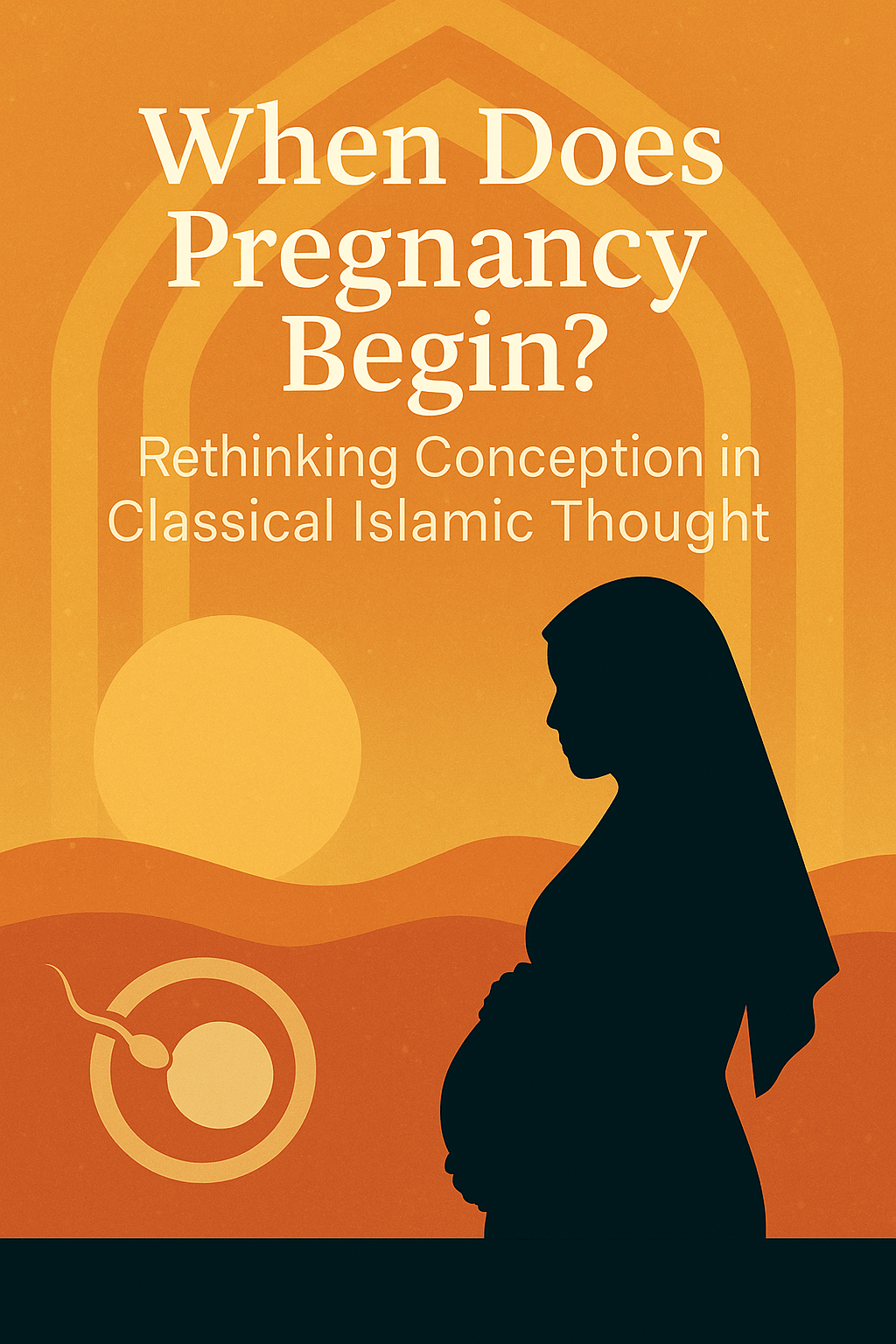
When Does Pregnancy Begin? Rethinking Conception in Classical Islamic Thought
By Dr. Rafaqat Rashid
Summary by Al Balagh Academy
Introduction
In contemporary bioethics and medicine, defining the beginning of pregnancy carries immense legal and moral weight — especially for Muslims navigating issues of contraception, fertility treatment, and abortion. Is pregnancy the moment of fertilization or implantation? While modern science emphasizes genetics and biology, Islamic jurists traditionally relied on scriptural and moral reasoning. This blog summarizes key insights from Dr. Rafaqat Rashid’s paper exploring how classical Muslim scholars understood the beginning of pregnancy — and what that means for Muslims today.
The Problem with Definitions
Medical and legal authorities have long debated the meaning of “conception”:
-
Fertilization: when sperm and egg unite to form a zygote.
-
Implantation: when the zygote embeds itself in the uterine wall.
This debate is not merely academic. It affects whether emergency contraception is viewed as a birth control measure — or an abortifacient. Islamic jurisprudence, too, hinges on how and when we define the start of life and whether early-stage interventions are morally and legally permissible.

Classical Islamic Frameworks
The Qur’ān uses rich metaphors and stages — nuṭfa (drop), ʿalaqa (clot), muḍgha (chewed lump) — to describe embryological development. Classical Muslim scholars interpreted these in light of their own time’s medical knowledge.
Key insights include:
-
Nuṭfa as a Fusion: Scholars acknowledged the role of both male and female fluids in forming life, interpreting nuṭfa amshāj as a mixture — similar to modern understandings of fertilization.
-
Implantation = Pregnancy: Most classical jurists viewed implantation (when the nuṭfa is lodged in the womb) as the moment when pregnancy legally and morally begins. Before this point, actions like ʿazl (coitus interruptus) were considered permissible with fewer ethical concerns.
Moral Status of the Zygote
So what about the fertilized egg — the zygote — that exists before implantation? Dr. Rafaqat argues that:
-
Classical scholars did recognize its moral potential, but didn’t equate it with a full pregnancy.
-
Scholars like Imam al-Ghazālī granted it a “beginning of the means of existence” status, making its termination morally questionable but not on par with abortion.
This nuanced approach means interventions like emergency contraception, which may act before implantation, could be ethically permitted — depending on one’s interpretation.

Implications for Today
Given what we now know — that fertilization occurs before implantation — some classical assumptions need reconsideration. Modern scholars must ask:
-
Should fertilization alone carry moral and legal weight?
-
Or does pregnancy only begin with implantation, as many classical jurists believed?
Dr. Rafaqat encourages a cautious, balanced approach:
“It is best to judge the moral crime of abortion in its equivalence to the nuṭfa stage… which would require more stringent conditions for permissibility.”

Conclusion
Islamic tradition offers a rich, layered understanding of human life’s beginnings — rooted in Qur’anic stages, prophetic traditions, and scholarly reasoning. While classical scholars primarily defined pregnancy as beginning at implantation, they also recognized the potential of earlier stages like fertilization. Today, as Muslims face new reproductive technologies and bioethical challenges, we are called to revisit these interpretations — not to undermine them, but to faithfully apply their principles in light of evolving knowledge.
📄 Read the full academic article by Dr. Rafaqat Rashid here:
“Classical Muslim Scholarly Interpretations of When Pregnancy Begins?” (Journal of the British Islamic Medical Association)
Please scroll down to view or download the full PDF.
🔗 Learn more about the author: Visit Dr. Rafāqat Rashid’s profile here to explore his academic background, publications, and teaching contributions.
🕌 Presented by: Al Balagh Academy


Explore Relevant Courses